


Class of 1968
Alumni Liaison
Volume 11 | Number 5
Welcome to the September 2026 edition of Rise, the voice of Grand Island Senior High alumni and friends. School is back in session and Senior High is welcoming yet another generation of Islanders.
As we do every other month, we landed in over 11,000 in-boxes today bringing you news, views, and memories of GISH. Rise is a publication of the Grand Island Public Schools Foundation.
This is Issue #5 of our 11th year of publishing the only consistent connection for alumni and friends of Grand Island Senior High. That makes this iteration 65 of Rise as we move smartly into another decade of bringing the comings and goings of Islander alums across the globe.
Say hello to Britton Sackschewsky, Rise’s newly-minted On the Island correspondent. She introduces herself in this issue and talks about what makes GISH home. Make time to get to know her. Mike Monk’s Distant Mirror column is all about happiness and it couldn’t come at a better time. Thanks, Mike. Wandering Writer Sarah Kuta makes a compelling case for visiting a place more than once. My I’ve Been Thinking piece details all the generations since 1900 who have been through the halls of Senior High.
Speaking of which, a new generation and a new school year are also the focus of this issue’s At the Top, which you can find on our front page.
Harvest -- scheduled for September 24 -- is still on the mind of Foundation Executive Director Kari Hooker-Leep. Administrative Development Associate, Mandy Sullivan writes about preserving a legacy through a scholarship that provides a life-changing opportunity for a student.
As usual, In Memoriam lists those Islanders who have passed. In Reunions we have class gatherings and other class get-togethers, and in Class Notes we have the lives and times of Islanders everywhere. And, once again, you’ll get a chance to test your memory -- or at least your Google search skills -- with another edition of Islander Trivia.
Stay in touch, Islanders. And remember: Keep pushing on.


-
At the Top
George Ayoub reflects on the five Islander students that started it all 144 years ago and how today’s Islanders carry the legacy forward.

-
Making Your Mark
Kari Hooker-Leep reflects on 5 years of collective generosity at Harvest empowering GIPS students and educators to dream big.
-
Foundation Focus
Mandy Sullivan focuses on how to preserve your legacy by developing scholarships with the GIPS Foundation.

-
I've Been Thinking
George Ayoub discusses six generations in one school and how GISH spans a century of cultural shifts.
-
On the Island
Britton Sackschewsky takes the helm as the new Islander student correspondent, sharing behind-the-scenes reports on savoring the present before the final bell.
-
Distant Mirror
Mike Monk explores the timeless principles, everyday choices, and meaningful connection that builds lasting fulfillment.
-
A Wandering Writer's World
Sarah Kuta revisits familiar footsteps and shares the unexpected joy of going back.

-
Class Reunion Updates
Class gatherings in Islander Nation.
-
In Memoriam
Remembering Islanders who have recently passed.
-
Islander Trivia
How well do you know Grand Island Senior High?

-
 Tom Dinsdale
 -


At the Top
Class of 2027 Starts the Journey that Five Students Did 144 Years Ago
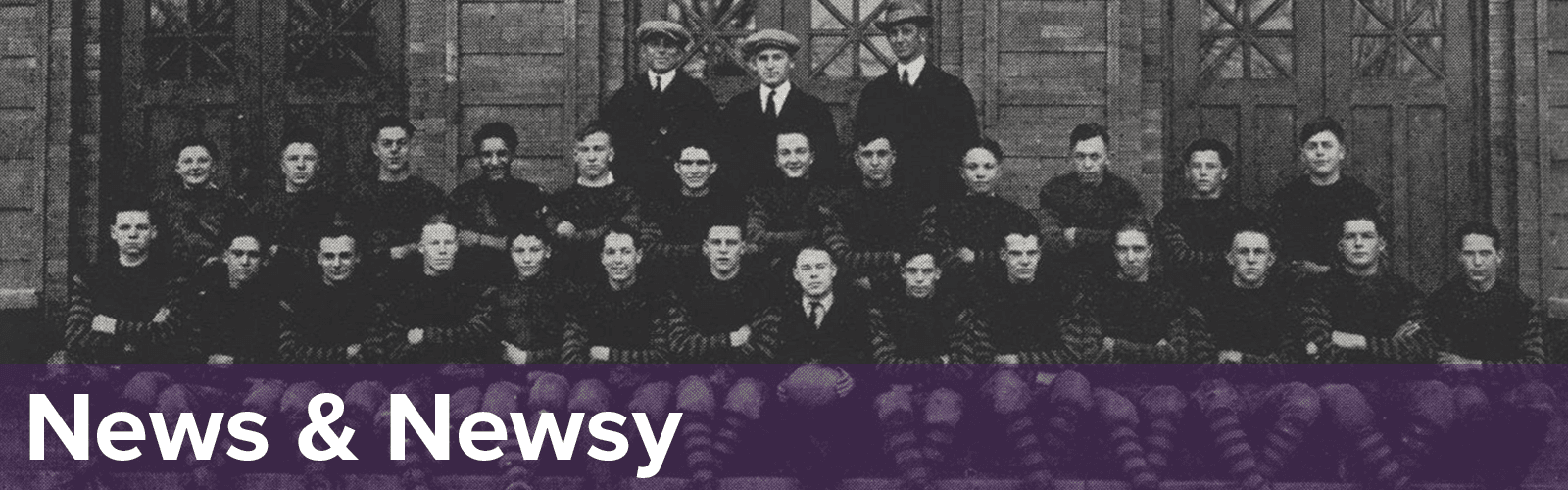
According to a Facebook post from Stuhr Museum, the first Commencement at Grand Island Senior High comprised five students and celebrated their inaugural feat in June of 1883. That meant the quintet showed up the previous September and worked their way through the school calendar … much like students who showed up at GISH this August are doing, specifically the Class of 2027.
Those who will be sporting diploma’s next spring are members of the tail end of what we now call Gen Z or iGen. Their counterparts from 144 years ago were born too early to even have a designation. (For a full breakdown of all the generations, see the “I’ve Been Thinking” column in this issue.)
What that means for GISH is that this year’s juniors, the Class of 2028, members of Generation Alpha, will be in the vanguard of the seventh generation of Islanders to grace the halls of the school. That’s a long time to wear purple and be gold.
While every generation has its own personality, traits, and character, a high school can meld something among and between each of them. So, while Boomers and Gen Zers may share very little in common when it comes to music, fashion, technology, and a million other things, having been to the same high school forms, can in some way, create a connective tissue that spans generations.
So welcome to the new school year with all its possibilities and promise and, eventually, diplomas come spring. While all that looks and feels vastly different from previous generations, a thread of commonality still holds strong … even 144 years ago this September.
(e) Mail Bag


Making Your Mark
Harvest Provides Fuel for GIPS ‘Launching Pad’

Class of 1983
Executive Director
GIPS Foundation
Late September offers cooler weather, classrooms full of ambitious students, and local leaders an opportunity to gather together with a shared vision. When the Grand Island Public Schools Foundation launched its inaugural Harvest fundraiser in the fall of 2022, the mission was one vision: the belief that ALL STUDENTS MATTER! The goal was to build a community-driven gathering that would directly fuel three key pillars for GIPS students and staff: expanding college and trade school scholarships, funding emergency and student-wellbeing compassion grants, and supporting staff through professional development opportunities.
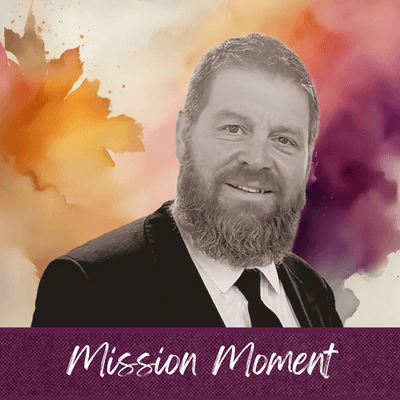
Mission Moment speaker Larry Baker
Fast-forward to today and Harvest is celebrating its 5th Anniversary on September 24, 2026. What started as a new tradition is now Grand Island’s ultimate masterclass in collective generosity. The past four years have been a fast-paced, high-energy ride filled with lively auctions, inspiring alumni stories, and the fan-favorite Dessert Dash. That momentum reached a record-breaking peak last year by raising over $177,000 in just one night. Entering its fifth anniversary milestone, Harvest is now a powerhouse of opportunity that fuels the Foundation’s annual distribution of hundreds of thousands of dollars in support.
Because of your attendance, auction bids, and donations at Harvest, the GIPS Foundation has dramatically expanded its three central pillars of impact. Growing scholarships ensures Grand Island Senior High graduates can break generational barriers to pursue college degrees or trade certificates in fields like nursing, engineering, and business. Advancing compassion programs, such as the Agnes Ayoub BAB Fund, the Wolbach Student Kindness Fund and the NEW Harvest Hero Compassion Fund, which provide rapid relief and basic necessities so that unexpected life hardships never derail a student's education. Meanwhile, additional professional development grants have been established that directly invest in dedicated GIPS teachers, counselors, and administrators by funding their post-graduate coursework and master's degrees, enriching classrooms across the entire district.
Harvest also honors the people who make this magic possible. This year, guests will hear from Mission Moment speaker Larry Baker, whose personal journey shows how the right school mentor can completely transform a student's trajectory into executive success as a public school superintendent.
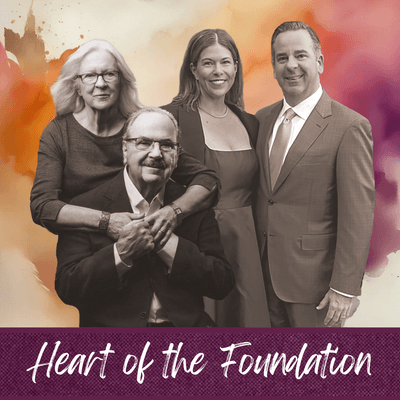
Heart of the Foundation honorees Eric & Connie Allen and Mark & Jordan Allen
Every Harvest event is the celebration of individuals whose selflessness embodies the soul of the GIPS Foundation mission. Over the years, the Foundation has proudly recognized remarkable leaders through the Heart of the Foundation honor, including Marv Mauer, the creator of our Academic Aristocrats program, Jeff “Whitey” and Jane Richardson for their constant championing of students, Lanny Martin for his indelible legacy of leadership, and Ron and Dan Eakes for an 80-year family business legacy through Eakes Office Solutions that has built ongoing opportunities in trade programs and higher education. This year, the Foundation is extraordinarily proud to honor Eric, Connie, Mark, and Jordan Allen as our Heart of the Foundation honorees for their dedicated advocacy, unwavering community spirit, and tireless support of GIPS and the GIPS Foundation.
Because of your support, GIPS students have the ultimate launchpad: the security to feel safe, the tools to learn, top-tier educators to guide them, and the financial boost to dream BIG. Cheers to five years of changing lives together at Harvest—and to the limitless potential of tomorrow.
If you're going to live, leave a legacy. Make a mark on the world that can't be erased. - Maya Angelou
Foundation Focus
Fueling Futures: Preserve Your Legacy Through a GIPS Scholarship

Administration & Development Associate
GIPS Foundation
As GIPS alumni, you understand that education extends beyond test scores and textbooks; it’s the cornerstone of future success. Every year, thousands of students walk through the doors of Grand Island Public Schools carrying big dreams: becoming first-generation college graduates, launching innovative businesses, or inspiring the next generation as teachers. Yet, for many students, turning those dreams into reality takes an extra spark. That’s where our community steps in to ignite the fire—opening doors through scholarships that ensure access to the opportunities they deserve.
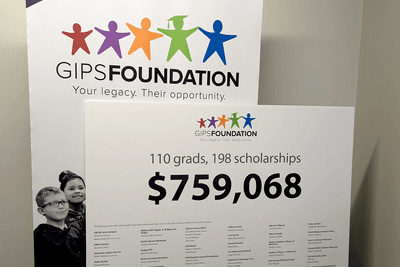
2026 Scholarship Awards
When meaningful milestones arrive, whether stewarding the earnings of a thriving family business or honoring a deeply loved life through memorial gifts, we are presented with a profound question: how do we channel these resources into something enduring? While there are many ways to pay tribute to life's pivotal moments, creating a scholarship through the Grand Island Public Schools (GIPS) Foundation stands out as a transformative gift that stretches across generations. By investing in local students, you transform memories and years of hard work into a living legacy, unlocking potential and opening doors for young people eager to make their mark on the world. Partnering with the GIPS Foundation ensures that your cherished story or the enduring spirit of someone you love remains an active force for good, directly shaping a student’s future today and cultivating the leaders, innovators, and changemakers of tomorrow. Scholarship donor Cindy Beran shared how rewarding the experience has been for her family. “The GIPS Foundation made the process of establishing our two scholarships easy and straightforward. It is phenomenal to meet the recipients each year at the scholarship reception. We feel blessed to be able to support these students in their dreams for their future.”
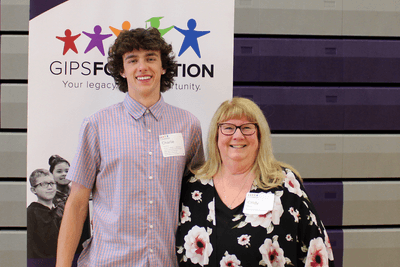
Charlie Gentry Scholarship Recipient with Scholarship Donor Cindy Beran at the 2024 GIPS Foundation Scholarship Reception
When a donor establishes a scholarship, they aren't just writing a check for a single academic term. They are creating a permanent foundation for students to build their dreams upon, transforming single moments of support into lifelong success. Creating a scholarship with the GIPS Foundation is simple, personal, and tailored to you. We guide you step-by-step to design a fund that reflects your values, honors your loved ones, or represents your business.
Together, we establish your legacy through a straightforward, three-step process:
- Share Your Vision: We sit down with you to discuss your goals and help define the criteria for the students your scholarship will support.
- Choose Your Funding Structure: We help you decide whether your gift will fund a scholarship annually or support students forever.
- Build Your Legacy: You set the award amount, and we handle the administrative details to ensure your gift makes maximum impact.
Scholarship Options:
Endowed Funds (Permanent Impact): Endowed funds are invested so the principal grows while generating an annual award forever. The Foundation generally allocates 4% of the fund's total value each year for the scholarship award.
- $1,000 annual scholarship: Requires a $25,000 endowment.
- $500 annual scholarship: Requires a $12,500 endowment.
Flexible Growth: You don't have to fund an endowment all at once. You can start at any level, make tax-deductible contributions over time, and let the Foundation invest the balance until it reaches your goal.
Pass-Through Scholarships (Annual Impact): If you prefer to fund a scholarship year-by-year rather than creating a permanent endowment, the Foundation processes the award and sends it directly to the student’s college or university for a nominal administrative fee of $50 per scholarship.
The GIPS Foundation doesn’t stop at student scholarships. Educators also have access to Professional Development Grants, which provide financial assistance to certified teachers, administrators, and eligible staff members actively pursuing further education at accredited Nebraska institutions. By investing in their ongoing growth, the GIPS Foundation enhances the skills and knowledge of our workforce—ultimately elevating the quality of education and creating a more dynamic learning environment for all students.
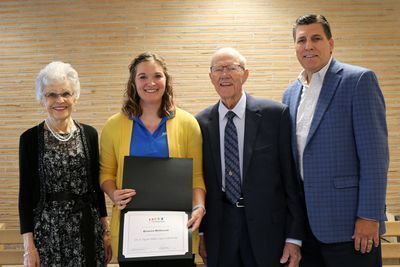
Professional Development Grant Recipient Breanna McDonald with Miller Family
Breanna McDonald, a former Professional Development grant recipient, said, "The Miller Grant provided me with the opportunity to continue to grow as an educator and leader, ultimately putting me in the position to step into a leadership role for the district. I am proud to carry on the legacy of Dr. Miller through my work with the district. If you have aspirations to make a difference for students, staff, and families through your continued growth as a professional, this grant will help you to make that difference."
When you support the GIPS Foundation, you help cultivate a community where every student and teacher has the tools to succeed. As Rise alumni, you carry the legacy of Grand Island Public Schools forward—and you hold the power to shape its future. Whether through creating a scholarship, supporting our dedicated educators, or simply staying connected, your involvement ensures the next generation of GIPS students has the resources, encouragement, and spark needed to reach their potential. Together, we can keep fueling bright futures.
back to top
I've Been Thinking
Boomers Part of Six GISH Generations
Class of 1968
Alumni Liaison
My grandkids were born 15 months apart but belong to two different generations. Go figure. That familial demarcation comes via the editors of Parents magazine with help from a Boston University professor of sociology. The magazine’s June 26 edition listed all the generations and their designations since 1900.
No, I was not researching what’s wrong with the younger generation. (Pro tip: At some point they’re all younger. I’m getting there.) Rather, I came across the article after reading the phrase “Generation Beta,” referring to anyone born between 2025 and 2039. I have one of those in my growing family tree - future Nobel Laureate and leading scorer in the WNBA -- so I was curious, and, to date, unable to keep X, Y, Z and the others straight.
Here’s the breakdown so you can get a sense of where you, your family members, and your friends fit the generational roll call.
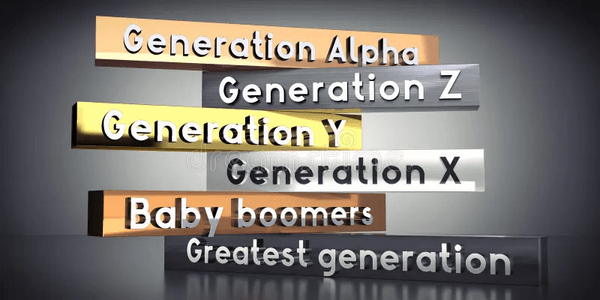
- The Greatest Generation (sometimes called the GI Generation), born 1901-1927
- The Silent Generation, born 1928-1945
- Baby Boom Generation, born 1946-1964
- Generation X, born 1965-1980
- Millennial Generation (or Generation Y), 1981-1996
- Generation Z, born 1997-2010
- Generation Alpha - 2011-2024
- Generation Beta - 2025-2039
Of the above groups, Millennials are the largest, checking in at more than 74 million, which is a tick below 22% of the U.S. population. Obviously, the Greatest Generation is almost gone and the Betas are just getting started. Rise reaches nearly every generation on the list, Senior High alums representing at least five of the generations.
The magazine offered sweeping details about each of the groups from the hard work and grit of the Greatest Generation who survived a Depression and won a world war to the wee little Betas, whose lives will forever be entwined with and influenced by AI. You can check out the article here, although you’ll find nothing really new in how sociologists and other smart people who study such things see the different generations.
How one generation sees another, however, is always fodder for a friendly disagreement or more, depending on the evidence, real or imagined, and the demeanor of whoever is presenting it. Broadsides such as “Kids these days …” and “Why, in my day ..”may get some knowing nods of approval but offer few specifics.
The magazine said that many in my 1946-1964 cohort -- these days occasionally dissed by young’uns with a snarky “OK, Boomer” -- were actually “wild.” That we “defied (our) parents, protested the Vietnam War, and created the "Summer of Love." The editors failed to mention we also pulled off the original and by far the best Woodstock, outed crooks during Watergate, and fueled the civil rights movement. So Boom!
When I think about a school such as Senior High, the one which we have in common, I think about a place having to have enough elasticity to accommodate the cultural, social, and educational vibe and vision of different generations of students … that number now at six.
Finally, not to start anything with “younger generations” -- and keep in mind I’m an aging Boomer -- but when I read the Parents magazine article the phrase "old age and treachery will overcome youth and skill" came to mind. What could that possibly mean?
On the Island
Welcome to Today’s Senior High … all of it

Class of 2027
Student Correspondent
Hello, readers of Rise. My name is Britton Sackschewsky (Shack), and I’m a senior at Grand Island Senior High. I am extremely excited to take over from the immensely talented Reagan Kort as the 2026-2027 school year’s “On The Island” correspondent. I hope to bring an outlook of joy, nostalgia, and gratitude to highlight the beauty of Grand Island Senior High.
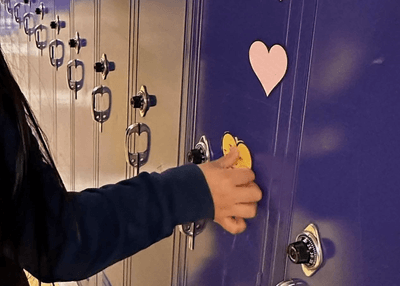
I am a GIPS student through and through, having been enrolled in both school and activities with GIPS since kindergarten, and it has been an amazing experience thus far. Like my fellow correspondents before me, I have been involved in so many things throughout my high school career. Currently, that includes Hope Squad, Academy Ambassadors (now called GI Elite) as the Academy of Medical Sciences and Education Representative, HOSA, Youth Philanthropy Board, Student Council, and am President of National Honor Society. Additionally, I help teach choreography for Westridge Middle School Show Choir, which also gives me quality time with my mom, the Westridge vocal music teacher. Over the past few years, I have also been involved in track and show choir; however, last March I had spinal surgery to correct a previous injury from track, which has left me unable to participate in those activities this semester. Despite that, I have loved being part of all the amazing opportunities GISH has to offer, as I’m sure you did during your time at Grand Island Senior High.
But clubs, titles, and extracurriculars only explain half of what makes GISH feel like home. To encapsulate exactly what being here feels like, I want to take you into the heartbeat of GISH. I want you to close your eyes and remember: Remember the sound of sneakers squeaking on the tiles, the gathering of students in the hallways (although there might be a little more pushing involved nowadays). Smell the breakfast meals being served that might or might not have already run out of syrup. Hear the different languages being spoken, spanning all the countries represented at GISH. The talking, laughing, and reprimands to make sure you’re wearing your ID.
What makes GISH beautiful isn’t everything you can be involved in, but it's the people you meet when you join those things. It’s the excitement you feel when you see a friend in your class. It’s those rainy Friday mornings in your English class, reading “Romeo and Juliet,” where you giggle when your friend mispronounces one of the many infuriatingly hard names to say. Because despite those things not seeming as exciting or as important as a Friday night football game, they mean just the same. They create that tie that produces an atmosphere of familiarity and comfort. Those are the things that matter; those are the things that make GISH home.
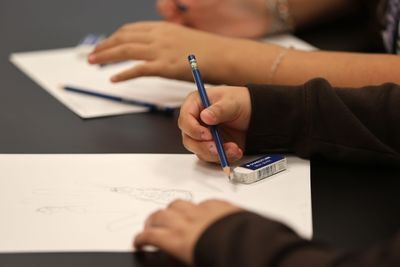
That nostalgia hits differently when you are entering your final year. Everyone wants to race to the finish line when it seems so far away, but the closer you get, the more you come to realize that taking a deep breath and enjoying the present is far more important. I’ve always been asked what I plan to do with my future, and while that is a necessary question, I have a better one: What do you plan to do now? How do you plan to spend these fleeting hours before the hallways you walk aren’t yours anymore? The community I’ve created for myself is something I won’t take for granted because once I leave, it won’t be the same. I’ll have to turn my attention to more adult-like things, like bills (cue the shivers).
Throughout this year as your correspondent, I hope to discuss topics that cover all the emotions, making you feel the ups and downs that come from battling the impending closing of one chapter. But what a privilege it is to have a hard time saying goodbye. These lasts I will share with you; I plan to make some of the best. So, stick around, and explore every corner of the place that shows us how lucky we are to cherish Grand Island Senior High, the place we call home.
A Distant Mirror

Class of 1967
Rise Contributor
Happiness
When parents bring a new child into the world, they often have very high hopes for the offspring. They would like to think their child could be president or a senator or maybe a millionaire. But as their child grows and reality sets in, the parents come to realize that the primary thing they want is for their child to be happy.
What brings happiness? Some would say a nice ice cream sundae, a good day at the race track, or a terrific parking space will make them happy. But those provide short term happiness. What brings long term life happiness?
One formula I’ve believed in for decades is quite simple. To be happy one needs (1) someone to love, (2) something to do, and (3) something to look forward to. A more flippant formula, a bit tongue in cheek, is that (1) a loving spouse, (2) a comfortable pair of old shoes, and (3) money in the bank will bring happiness.
Money can certainly help avoid some difficulties in life, but it does not always bring happiness. Wealth brings with it responsibilities and a need to care for the resources so as not to squander them. Sometimes wealth numbs a person and obscures the important and joyous things in life. Shakespeare’s “As You Like It” has a wonderful character, a rustic named Corin, whose happiness is palpable:
“Sir, I am a true laborer. I earn that I eat, get that I wear; owe no man hate,
envy no man’s happiness; glad of other men’s good, content with my harm;
and the greatest of my pride is to see my ewes graze and my lambs suck.”
There seems to be a general consensus as to what brings long term happiness:
Relationships:
Deep, supportive bonds and interactions with family, friends and loved ones lower stress and protect brain and physical health as we age. Creating and maintaining friendships can be a daunting task, but the time is wisely spent. Make that call or write that letter or email to the longtime friend even if nothing is up. Keep communication alive. Those who daily interact with friends and family with regular Zoom calls, Face Time, text threads, emails, and, even more so, with in-person gatherings and meals, benefit greatly.

Do good work and follow your bliss:
Embracing projects, hobbies, and work that challenge you and align with your personal values brings self-respect and meaning to life. Creating something, however modest, brings great contentment. Make the most of the talents you possess and the skills you enjoy. One may not be a great hedge fund manager, but may be a fabulous gardener. Those who realize their strengths, in whatever endeavor, and who pursue them, experience joy, satisfaction, and contentment.
My late Aunt Jerenne, mother of cousin Randy Garroutte (GISH Class of 1970), loved nothing better than garage and rummage sales. She would beam with joy to find a bargain. She once came home with a pair of fancy Nike sneakers and gushed, “They don’t fit me, but they were only a buck fifty!” My mother, Ramona, on the other hand, loved nothing better than manning the home front and baking for the family. My grandmother, Doris, reveled in the time spent with her grandchildren and bingo at the Eagles Club. While living with modest means, each of these ladies lived a very happy life. Follow your bliss! This also means to avoid those experiences and people who do not bring joy. Life is too short to spend in painful situations.
Physical Well-being:
Regular movement, proper sleep, and time spent outdoors release positive brain chemicals like dopamine and serotonin. Exercise and take care of your health. The feeling of quiet exhaustion after some serious exercise is wonderful. Physical well-being also promotes mental contentment. Make exercise a habit and an inviolable part of your day.
Live within your means:
One can be just as happy in a modest cottage as in a mansion. As I once heard said, “You can only water ski behind one yacht at a time.” To have little and wake with no burden is far better than to have much and be haunted daily by the constant scourge of debt. A corollary is “Neither a borrower nor a lender be.” This advice comes from Shakespeare’s Polonius in Hamlet:
“Neither a borrower nor a lender be
For loan oft loses both itself and friend
And borrowing dulls the edge of husbandry.”
A particularly dangerous practice is to loan money to a friend. At first the friend is delighted. But when the friend cannot repay the loan, tensions arise. The friend avoids you and begins to think of you as the problem. The far better approach, if you are able and if the need is dire, is to simply give the friend a “gift.” Your kindness will make you feel good about yourself; your friend now is simply grateful.
Kindness and Generosity:
Helping others creates an upward emotional spiral, and brings you self-worth and the respect of others. Decades ago, I came to realize that the most enjoyable part of Christmas morning is not the gifts I receive, but the looks on the faces of those who receive my gifts. Listening to classmates talk at my college reunions, a common theme is that the most satisfying part of their later lives is volunteering. They rave about the joy and satisfaction that comes from helping others.
This past Thanksgiving, my daughter, 15-year-old granddaughter, and 13-year-old grandson, and I volunteered at a non-profit providing free Thanksgiving meals to the Los Angeles homeless. It was striking how excited my grandchildren were to help. You could see in their faces the satisfaction it brought them.
Live in the moment:
I recently saw Thorton Wilder’s terrific play “Our Town" at the Okoboji Summer Theatre. The central message in this well-known play is that we often do not appreciate the beauty and meaning of our everyday lives. What wouldn’t we give to be able to return to a precious moment in our past. Part of living in the moment is letting go of the past and embracing forgiveness. Those who carry hate and grudges throughout their lives are the ones who suffer from their own anger.
Commit to being happy:
It seems to me that happiness is often a conscious decision. Some of us seem determined to find the negative in all matters. Some of us seem committed to look on the bright side of life. As the song by the Carter Family goes:
“Keep on the sunny side, always on the sunny side
Keep on the sunny side of life.
It will help us every day, it will brighten all the way
If we’ll keep on the sunny side of life.”
We all encounter problems and difficulties, but those who keep in mind the many blessings they have can better deal with the hurdles in life.
A Wandering Writer's World
Making the case for going back—and discovering the unexpected joy of returning to places we already know.

Class of 2008
Rise Contributor
I have a confession to make.
I pretty much always look up the plot of a movie or TV show before I watch it—a habit that I imagine puts me in the minority. I like knowing what’s going to happen before it happens. For the same reason, I love rereading books: There’s something comforting about knowing where a story is headed.
I think that same tendency carries over into the way I travel. This year alone, I’ve traveled to three destinations I’ve already visited—Norway, Ecuador, and Aspen—and each trip has reminded me that there’s something deeply satisfying about returning to a place you already know.
There is a peculiar pressure in modern travel to keep moving. Collect another country, another state, another landmark. Scroll through social media or travel websites and you’ll find endless country counts, destination tallies, and headlines that go something like, “I’ve visited every single national park, and this one was my favorite.” The implication is that the more places you see, the more accomplished a traveler you are—and that the goal is always to add another pin to the map.
In fact, one of the first questions people usually ask me after they find out I’m a travel journalist is, “How many countries have you visited?” For a while, I was embarrassed to admit that my “count” was relatively low. But now, I’ve come to see that number as a poor measure of how well—or how meaningfully—I’ve traveled. I’d rather return to a place I love, linger a little longer, and see it with fresh eyes than rush off in pursuit of another destination, just to add it to some arbitrary list.
I also recognize how fortunate I am to have the opportunity to visit these places once, let alone more than once. For many people, a trip to the Galápagos, Norway, or even a faraway national park may be a once-in-a-lifetime experience—and I don’t take that privilege for granted.
We treat the world as if it were a checklist, and returning to a place we have already visited can seem almost like admitting we have run out of ideas. But some of the best journeys begin when we stop insisting on novelty.
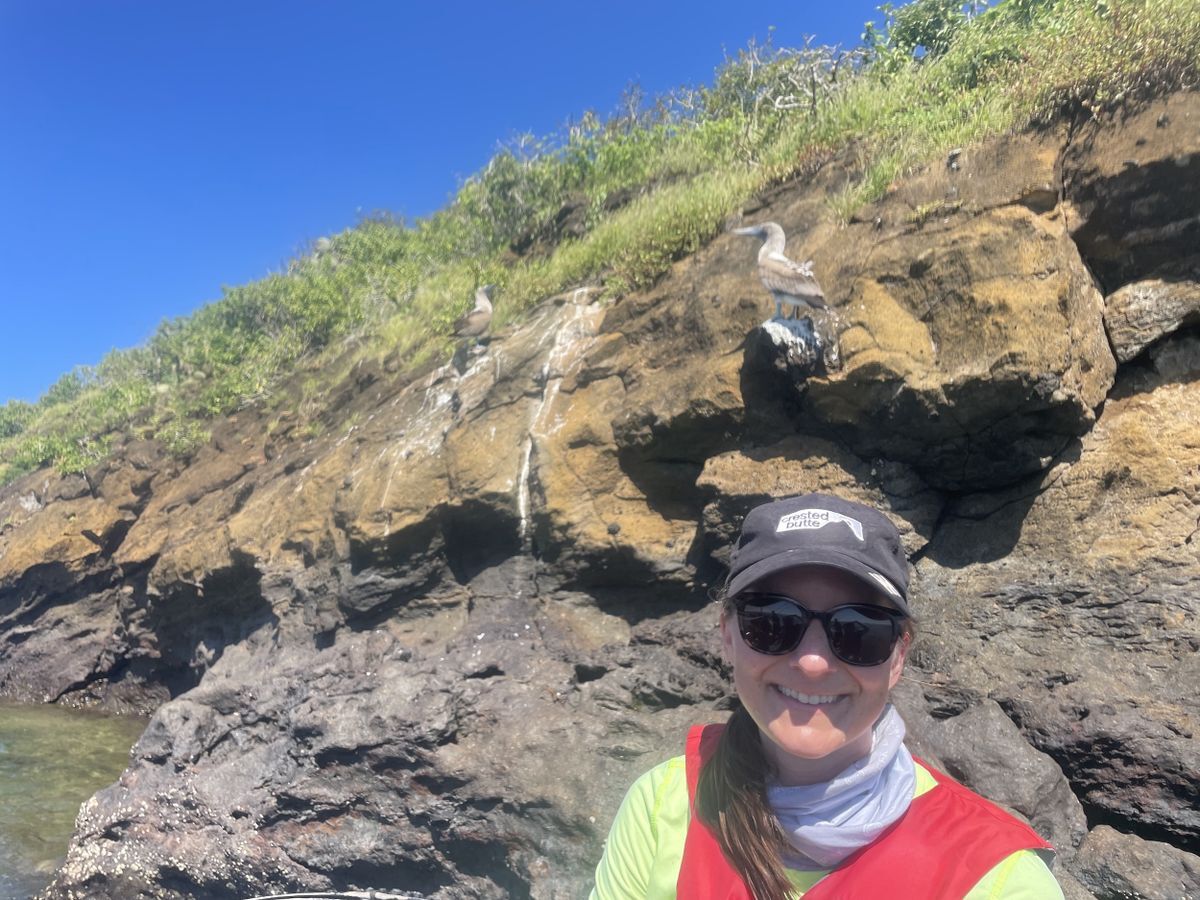
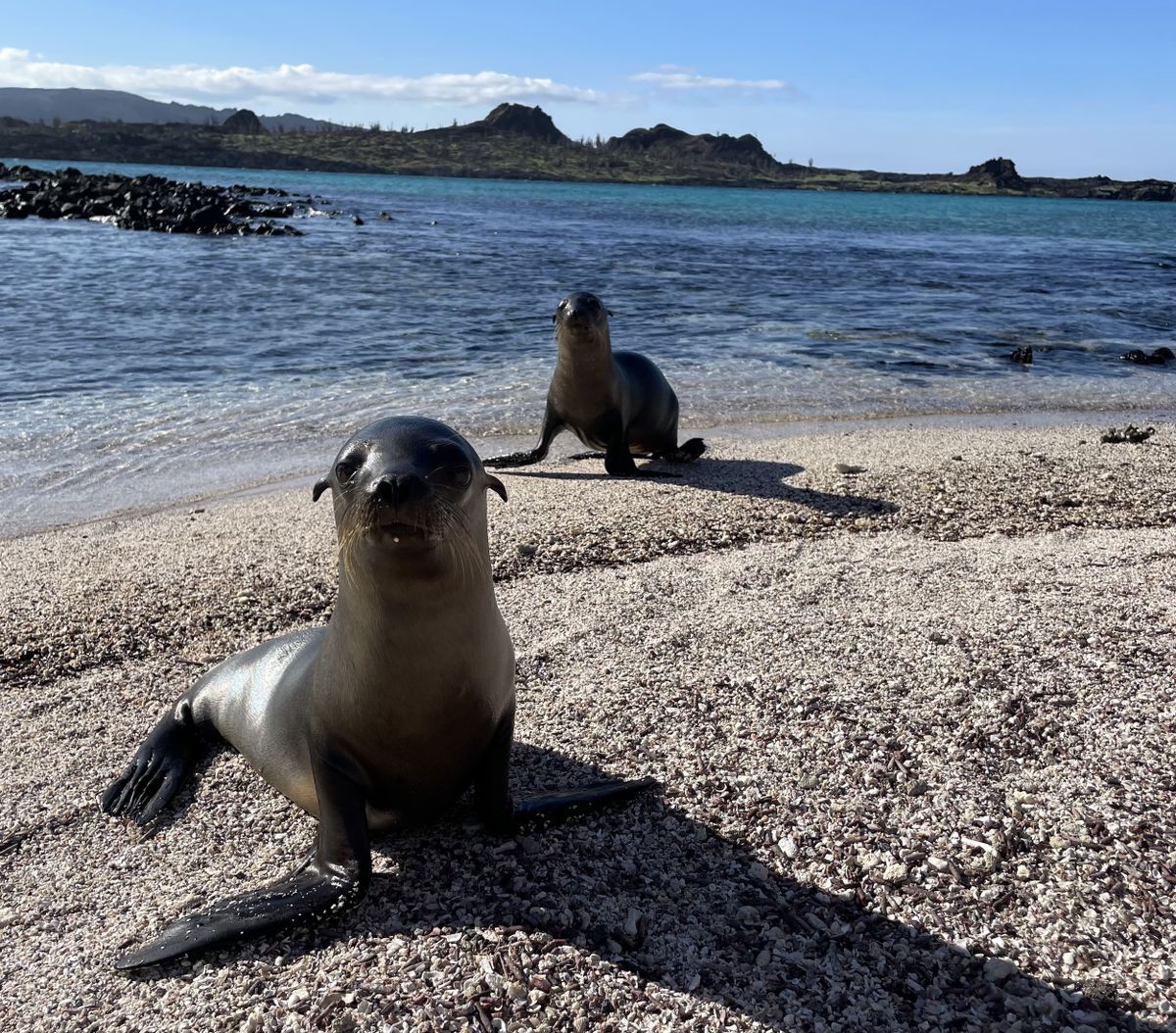
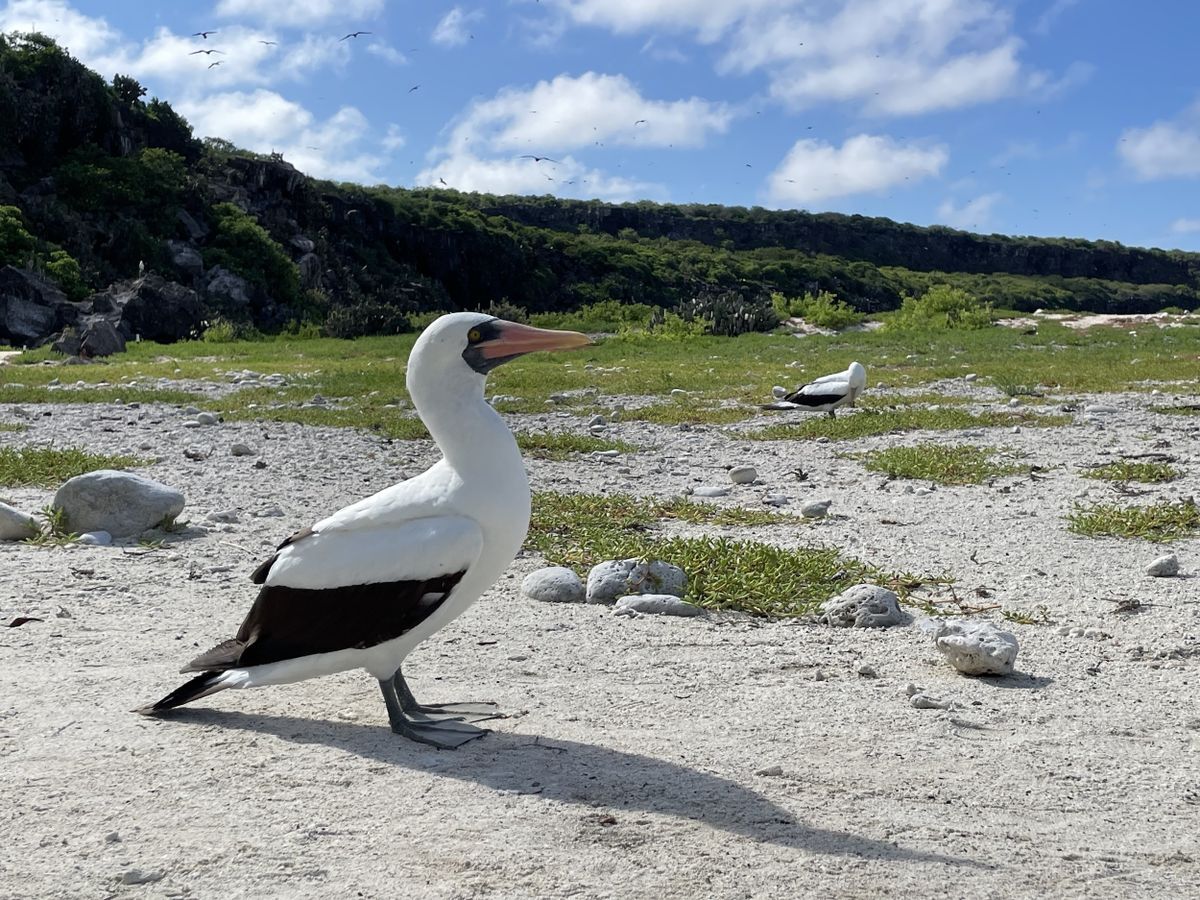
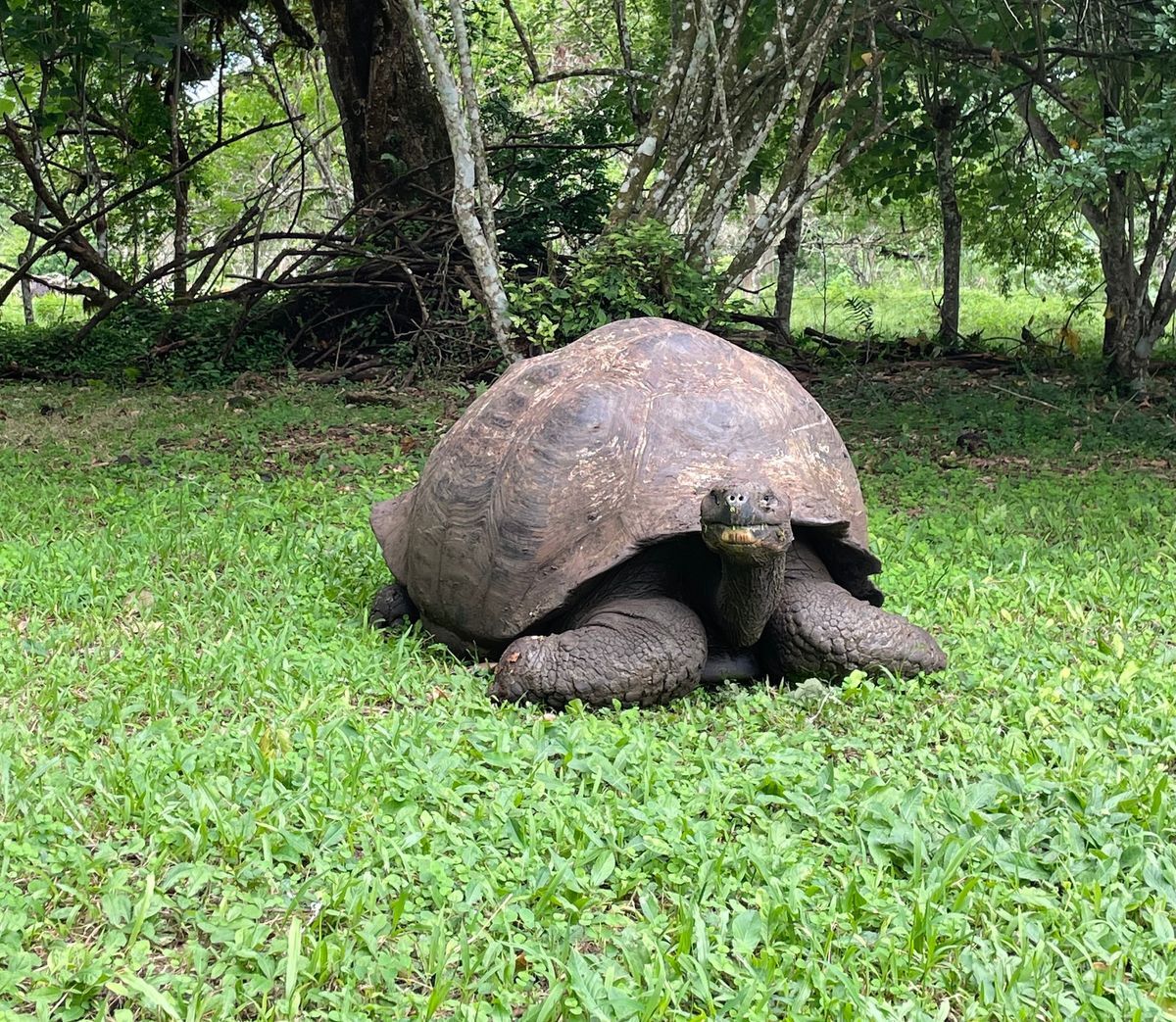
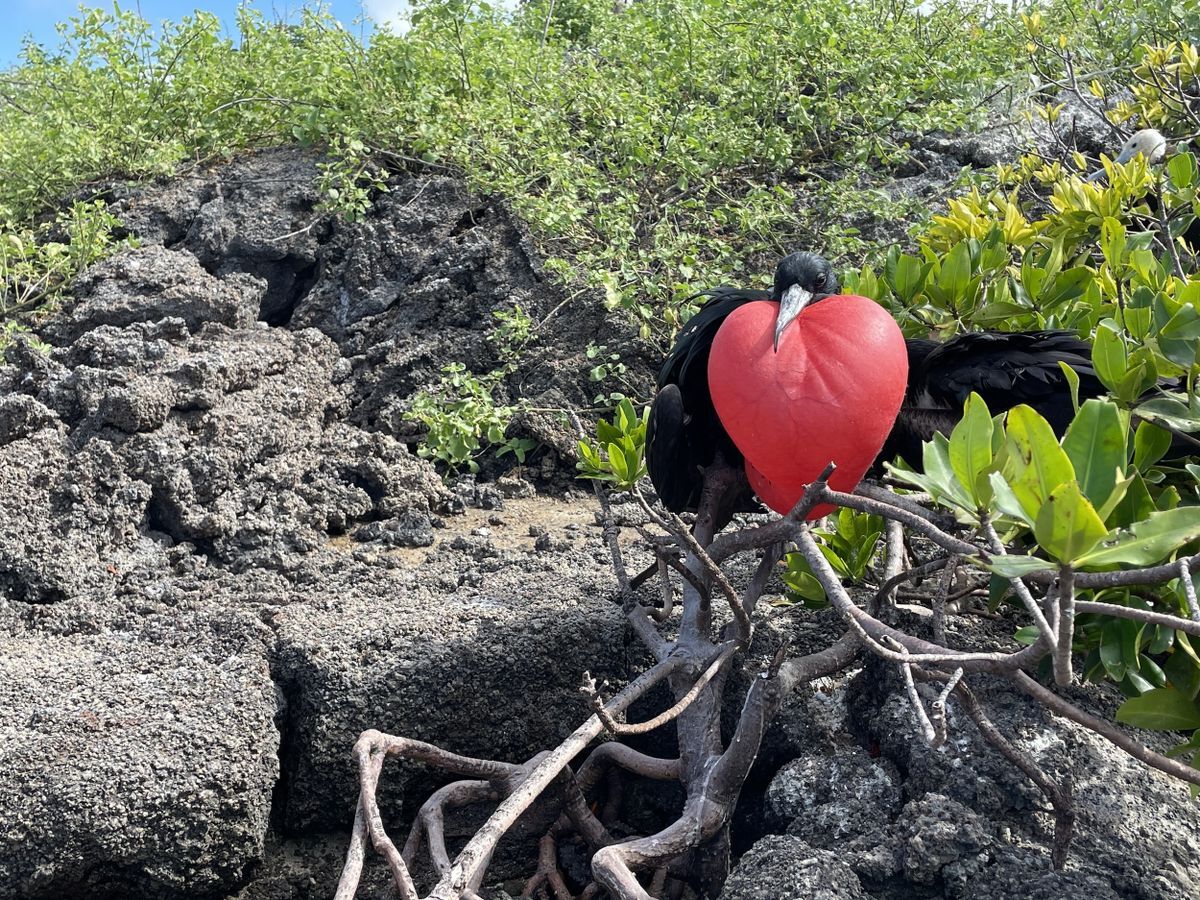

Returning to the same destination offers something a first visit rarely can: familiarity. The first time, we are often busy orienting ourselves—figuring out the streets, deciphering the menu, locating the train station, ticking off the famous sights. On a second or third visit, the mental map is already there. We can slow down. We can wander without an agenda, linger over breakfast, take the long way home.
And then there is the pleasure of recognition. A café becomes your café. You know which corner catches the afternoon light, which market stall sells the best peaches, which bench has the perfect view. You notice a favorite waiter has returned, or discover that the little bookstore has survived another season. A place that was once unfamiliar starts to feel like part of your own story.
Repeated visits also reveal something more profound: Destinations change, but so do we. The city we return to at 35 is not necessarily the city we remember from 25. We may suddenly appreciate the museum we skipped before, or find ourselves drawn to quiet neighborhoods rather than nightlife. A familiar place becomes a kind of mirror, showing us how our tastes, priorities, and circumstances have evolved.
There is also freedom in knowing you do not have to see everything. On a return trip, you can happily ignore the landmark everyone says you must visit. You can spend an afternoon doing absolutely nothing. You can revisit the restaurant you loved instead of gambling on somewhere new. Paradoxically, familiarity can make travel feel more adventurous because it removes the pressure to maximize every hour.
Perhaps most importantly, returning allows your relationship with a destination to deepen. The first visit is an introduction—I like to think of it as an appetizer sampler platter, a chance to get a little taste of everything. The second, though, is more of a meal. You’re no longer so focused on checking off the big, flashy sights or cramming as much as possible into each day. Instead, your brain can finally notice the smaller, subtler things. You begin to understand not just a destination’s top-line highlights, but also its personality and essence.
On my first trip to the Galápagos, for instance, I felt like I needed to keep my eyes wide open at all times. I was determined to soak up every possible sight, sound, and sensation, worried that if I blinked, I might miss something. Every sea lion, blue-footed booby, and giant tortoise felt like a once-in-a-lifetime encounter, and I was acutely aware that the trip would be over far too soon.
On my return earlier this year, though, that sense of urgency had softened. I was still amazed by the wildlife—how could I not be?—but I wasn’t quite so starstruck, and I didn’t feel the same need to see, capture, and remember everything. Instead of constantly flitting around, I could settle into the experience. I could actually pay attention to what I was seeing—be present and mindful.
My two cents: We should not measure travel only by how many new places we have seen. Sometimes the richest journeys are the ones where we return, look again, and realize that the destination has more to show us.
back to top
Alumni Reunions

Alumni Coordinator
kprice@gips.org
308.385.5525
Planning a class reunion?
We can help get you started!
Contact us for your class list and send us information about your reunion.
We will post it to our website.
NOTE: Reunion information in this newsletter is current as of the publication date. To see Reunion updates and additions go to our Alumni Reunions page.
-
 1956
1956The Class of 1956 wishes to extend an invitation to fellow classmates to join them at their monthly gathering. They meet on the 3rd Tuesday of each month at Pam's Cafe on South Locust at 11:30 am.
-
 Decades of the 60's
The Decades of the 60’s breakfast continues to be held the second Saturday of each month at IHOP, 8:30 a.m. This is a great opportunity to reconnect over a cup of coffee and/or breakfast. We would love to have you join us!
-
 1960
1960The Class of 1960 meets the first Wednesday of each month at Tommy's Restaurant at 11 a.m. Join us for lively conversation and a good time. Send your email address to Donna Weaver Smith for monthly communications at: dowesm@yahoo.com
-
 1966
1966Class of '66 meets for lunch on the third Wednesday of the month at noon with the place updated each month on our class Facebook page. Hope to see many friends attend!!
The 60th reunion for the Class of 1966 will be held on Sept 19, 2026 at the Grand Island Hotel / Casino from 6 pm - 11 pm. A block of rooms is being held for reservations ($179). Dinner will be served and there will be a cash bar. Contact Raynette (Webb) Martin for additional information. Approximate cost will be $50-$60/person.
-
 1967
1967The class of 1967 meets monthly on the 4th Wednesday from 2:00-5:00 at Tommy's for chit-chat, pie, and coffee.
The Class of 1967 would like to announce the 65th Class Reunion will be held on October 8 & 9, 2027. Mark your calendars! More information to follow.
-
 1969
1969The class of 1969 invites all classmates to our Monthly Luncheons. We meet the second Monday at noon of each month at The Finish Line at Fonner Park in Grand Island. Good Friends, Good Food, Good Times.
-
 1996
1996Please join our "GISH Class of 1996" Facebook page for Event links and to catch up with your classmates!
If you are not on Facebook and want more information about the events, please contact Jill Jakob Bonczynski at jilljakob@hotmail.com
In Memoriam
July and August memorial list of GISH Alumni
Gary Beckstrom, class of 1971, died July 4, 2026, at the age of 73
Jan Markham, class of 1973, died July 5, 2026, in Loup City, NE, at the age of 71
Frederick Becker, class of 1955, died July 7, 2026, in Grand Island, NE, at the age of 88
Matthew Bishop, class of 2003, died July 9, 2026, in Grand Island, NE, at the age of 41
Doug Bedell, class of 1977, died July 13, 2026, at the age of 67
Jim Stahlnecker, class of 1965, died July 17, 2026, at the age of 79
Dwayne Burmood, class of 1963, died July 21, 2026, at the age of 81
Ronald Lahners, class of 1951, died July 25, 2026, at the age of 92
Roberta (Wilson) Marler, class of 1950, died July 25, 2026, in Woodland Park, CO, at the age of 94
Mark Porter, class of 1997, died July 25, 2026, in Grand Island, NE, at the age of 48
Kent Boughton, class of 1975, died July 26, 2026, in Grand Island, NE, at the age of 69
Pam (Cramer) Sundermeier, class of 1967, died July 30, 2026, at the age of 76
Doreen (Husman) Anderson, class of 1978, died August 1, 2026, at the age of 66
Karen (Paro) Pharoah, class of 1972, died August 1, 2026, in Grand Island, NE, at the age of 72
Barb (Freese) Kellogg, class of 1968, died August 4, 2026, at the age of 76
Dick Knuth, class of 1957, died August 5, 2026, at the age of 87
Jerry Schwartz, class of 1971, died August 9, 2026, at the age of 73
Karen (Mendenhall) Stobbe, class of 1957, died August 10, 2026, in Grand Island, NE, at the age of 87
Lori Kunze, class of 1985, died August 12, 2026, in Grand Island, NE, at the age of 62
Kent Ostrander, class of 1983, died August 13, 2026, in Denver, CO, at the age of 61
Jack Hansen, class of 1984, died August 15, 2026, in Grand Island, NE, at the age of 60
Bob Zwiebel, class of 1970, died August 15, 2026, at the age of 74
Barbara (Herndon) Murman, class of 1949, died August 20, 2026, in Omaha, NE, at the age of 94
Joan (Sorgenfrei) Schmidt, class of 1961, died August 22, 2026, at the age of 83
Marilyn (Wells) Lindsay, class of 1954, died August 25, 2026, in Platte City, MO, at the age of 89
Sally (Rembolt) Jezak, class of 1955, died August 29, 2026, at the age of 89
Tom Ewoldt, class of 1968, died August 31, 2026, at the age of 75
To report an alumni death since June 2026, please send an email with the first name, last name, class year and maiden name if applicable to alumni@gips.org
Class Notes
Rise wants to help you celebrate your successes with other Grand Island Senior High alumni and friends. “Class Notes” is the place to highlight a birth, an anniversary, a promotion, a college degree, an award, or other notable personal accomplishments and triumphs. Tell us about that new business. That perfect baby … or grandbaby. That Masters degree you earned after years of hard work. That recognition from your company, your cohorts, your community.
Islander Trivia

How well do you know Grand Island Senior High?
Welcome to “Islander Trivia,” questions designed to send you to the deep recesses of your memory … or at least to your yearbooks, Facebook friends from high school or even Google.
Here is the trivia for this edition: Since a couple articles in this issue of Rise recall previous generations, this edition of Islander Trivia will test your knowledge of history. Put the eight events in the order in which they happened, the oldest being first.
-Senior High is remodeled, adding the 500 and 600 wings.
-The GISH football team went undefeated and unscored upon.
-MLK delivers his famous “I Have a Dream” speech.
-The third GISH building opened at 5th and Elm.
-Last time the GISH boys played in the State Basketball Tournament.
-GISH students brought Pet Rocks to school.
-A record 43-day shutdown of the federal government took place.
-Senior High wins its only State Baseball championship.
Answers:
1. The third GISH building opened at 5th and Elm. 1925
2. The GISH football team went undefeated and unscored upon. 1936
3. MLK delivers his famous “I Have a Dream” speech. 1963
4. GISH students brought Pet Rocks to school. 1975ish
5. Senior High began a major remodel, adding the 500 and 600 wings. 1994
6. Senior High wins its only State Baseball championship. 2008
7. Last time the GISH boys played in the State Basketball Tournament. 2010
8. A record 43-day shutdown of the federal government took place. 2025
Do you have a trivia suggestions for our next edition? We would love to hear from you!
back to topPrivacy Policy
- What Information Do We Collect? When you visit our website you may provide us with two types of information: personal information you knowingly choose to disclose that is collected on an individual basis and website use information collected on an aggregate basis as you and others browse our website.
- Personal Information You Choose to Provide We may request that you voluntarily supply us with personal information, including your email address, postal address, home or work telephone number and other personal information for such purposes as correspondence, placing an order, requesting an estimate, or participating in online surveys. If you choose to correspond with us through email, we may retain the content of your email messages together with your email address and our responses. We provide the same protections for these electronic communications that we employ in the maintenance of information received by mail and telephone.
- Website Use Information Similar to other websites, our site may utilize a standard technology called "cookies" (see explanation below, "What Are Cookies?") and web server logs to collect information about how our website is used. Information gathered through cookies and server logs may include the date and time of visits, the pages viewed, time spent at our website, and the sites visited just before and just after ours. This information is collected on an aggregate basis. None of this information is associated with you as an individual.
- How Do We Use the Information That You Provide to Us? Broadly speaking, we use personal information for purposes of administering our business activities, providing service and support and making available other products and services to our customers and prospective customers. Occasionally, we may also use the information we collect to notify you about important changes to our website, new services and special offers we think you will find valuable. The lists used to send you product and service offers are developed and managed under our traditional standards designed to safeguard the security and privacy of all personal information provided by our users. You may at any time to notify us of your desire not to receive these offers.
- What Are Cookies? Cookies are a feature of web browser software that allows web servers to recognize the computer used to access a website. Cookies are small pieces of data that are stored by a user's web browser on the user's hard drive. Cookies can remember what information a user accesses on one web page to simplify subsequent interactions with that website by the same user or to use the information to streamline the user's transactions on related web pages. This makes it easier for a user to move from web page to web page and to complete commercial transactions over the Internet. Cookies should make your online experience easier and more personalized.
- How Do We Use Information Collected From Cookies? We use website browser software tools such as cookies and web server logs to gather information about our website users' browsing activities, in order to constantly improve our website and better serve our users. This information assists us to design and arrange our web pages in the most user-friendly manner and to continually improve our website to better meet the needs of our users and prospective users. Cookies help us collect important business and technical statistics. The information in the cookies lets us trace the paths followed by users to our website as they move from one page to another. Web server logs allow us to count how many people visit our website and evaluate our website's visitor capacity. We do not use these technologies to capture your individual email address or any personally identifying information about you.
- Notice of New Services and Changes Occasionally, we may use the information we collect to notify you about important changes to our website, new services and special offers we think you will find valuable. As a user of our website, you will be given the opportunity to notify us of your desire not to receive these offers by clicking on a response box when you receive such an offer or by sending us an email request.
- How Do We Secure Information Transmissions? When you send confidential personal information to us on our website, a secure server software which we have licensed encrypts all information you input before it is sent to us. The information is scrambled en route and decoded once it reaches our website. Other email that you may send to us may not be secure unless we advise you that security measures will be in place prior to your transmitting the information. For that reason, we ask that you do not send confidential information such as Social Security, credit card, or account numbers to us through an unsecured email.
- How Do We Protect Your Information? Information Security -- We utilize encryption/security software to safeguard the confidentiality of personal information we collect from unauthorized access or disclosure and accidental loss, alteration or destruction. Evaluation of Information Protection Practices -- Periodically, our operations and business practices are reviewed for compliance with organization policies and procedures governing the security, confidentiality and quality of our information. Employee Access, Training and Expectations -- Our organization values, ethical standards, policies and practices are committed to the protection of user information. In general, our business practices limit employee access to confidential information, and limit the use and disclosure of such information to authorized persons, processes and transactions.
- How Can You Access and Correct Your Information? You may request access to all your personally identifiable information that we collect online and maintain in our database by emailing us using the contact form provided to you within the site structure of our website.
- Do We Disclose Information to Outside Parties? We may provide aggregate information about our customers, sales, website traffic patterns and related website information to our affiliates or reputable third parties, but this information will not include personally identifying data, except as otherwise provided in this privacy policy.
- What About Legally Compelled Disclosure of Information? We may disclose information when legally compelled to do so, in other words, when we, in good faith, believe that the law requires it or for the protection of our legal rights.
- Permission to Use of Materials The right to download and store or output the materials in our website is granted for the user's personal use only, and materials may not be reproduced in any edited form. Any other reproduction, transmission, performance, display or editing of these materials by any means mechanical or electronic without our express written permission is strictly prohibited. Users wishing to obtain permission to reprint or reproduce any materials appearing on this site may contact us directly.
Terms & Conditions
Return/Refund Policy
Refunds are returned using the original method of payment. If payment was made by credit card, your refund will be credited to that same credit card. Please contact us to discuss any necessary return or refund.
Delivery Standards
If shipping is needed, orders are shipped by UPS, FedEx, or USPS. We will alert you to the planned shipping method and timeframe. If a tracking number is provided by the shipping carrier, we will update your order with the tracking information.
Powered by Firespring
